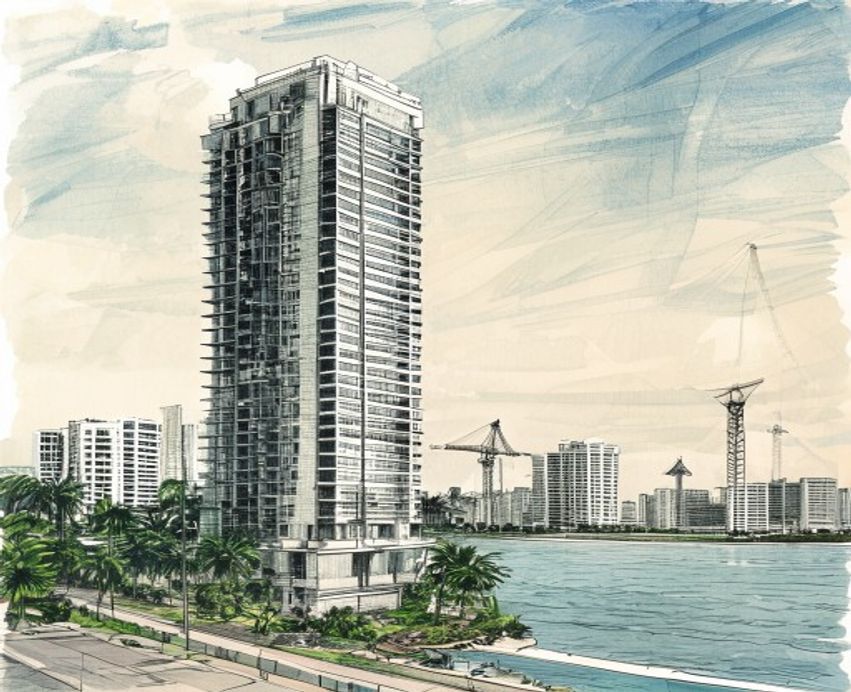
West Palm Beach's high-end residential market crossed a significant threshold this month as Alba Palm Beach, a luxury condominium tower perched along North Flagler Drive on the Intracoastal Waterway, commenced closings in June 2026. The development marks one of the most concrete signs yet that Palm Beach County's new construction cycle — years in the making — is now delivering finished product to buyers.
Alba is far from the last word in an increasingly crowded luxury pipeline. Developers are tracking at least three additional marquee projects set to come online in the coming years: Shorecrest is expected to reach completion in 2027, while Olara and the Ritz-Carlton Residences are both targeting 2028 deliveries. Taken together, the wave represents a sustained bet that demand from wealthy buyers will remain strong well into the decade.
That demand has been stoked in large part by a parallel wave of corporate migration into the county. Financial and technology heavyweights including Elliott Management, DigitalBridge, Goldman Sachs, and ServiceNow have each established or grown operations in Palm Beach County in recent years, injecting a steady stream of high-net-worth professionals and their housing needs into a market that was already drawing attention from out-of-state buyers fleeing higher-tax jurisdictions.
Downtown West Palm Beach has also benefited from infrastructure that makes it function more like a city than a resort enclave. Brightline's West Palm Beach station — connecting the city to Miami, Fort Lauderdale, and eventually Orlando — anchors the area's transit identity and has become a selling point for residents who want walkable access to intercity rail. Nearby, the NORA District, the stretch of city north of Clematis Street, has become a focal point for developers attracted by lower land costs and the neighborhood's evolving character.
The convergence of corporate relocation, transit infrastructure, and a maturing development pipeline has repositioned West Palm Beach in the minds of buyers who might once have defaulted to Miami or Manhattan. North Flagler Drive, in particular, has emerged as a de facto luxury corridor, with waterfront views and proximity to both the island of Palm Beach and downtown amenities driving price premiums.
As Alba closes its first units and future towers prepare to break ground or top off, Palm Beach County appears to be entering a new chapter — one defined less by speculative froth than by the more durable combination of established employers, transit access, and a residential product that can stand on its own merits in a competitive national luxury market.
Original reporting on the West Palm Beach new construction cycle was published by Scott Gordon Group.