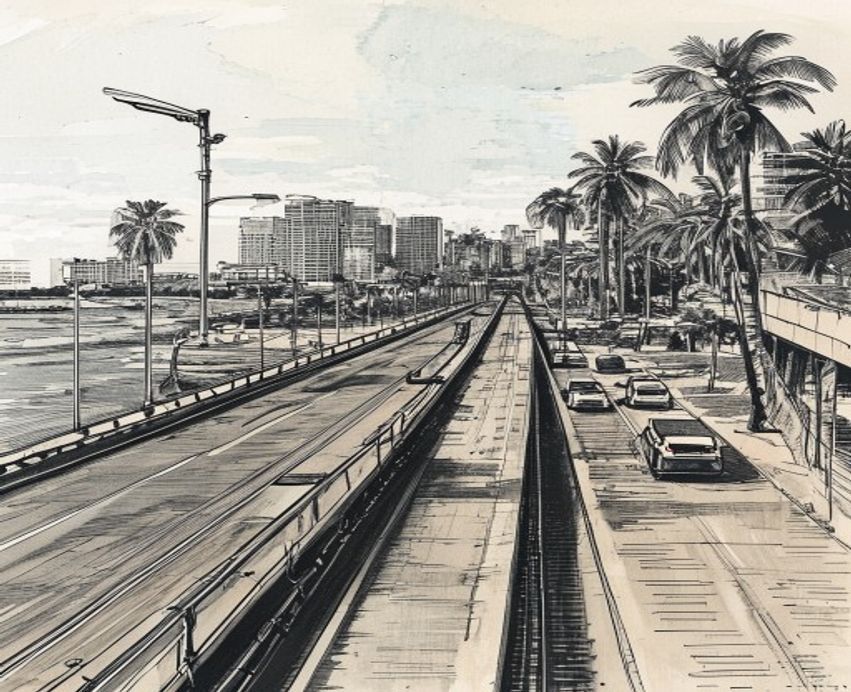
Miami-Dade County's long-planned Beach Corridor transit project — the rail or rapid-transit link that would finally connect Miami Beach to the mainland — is facing a stark financial reality: roughly $2 billion in secured funding is needed before the project can move forward, and right now, no one has a credible plan to get there.
The Department of Transportation and Public Works is currently reviewing the project's feasibility after state-level budget cuts eliminated matching funds that the county had been counting on. That loss has pushed the Beach Corridor — formerly known as Baylink, a concept that has circulated in regional planning discussions for decades — into what officials are describing as a value-engineering review, essentially a reassessment of what the project could realistically look like given a dramatically tighter fiscal picture.
The funding crisis drew a pointed warning from a member of the Citizens' Transportation Trust, who made clear that the full $2 billion must be secured before construction can become a reality. That figure underscores just how wide the gap is between the county's transit ambitions and its current resources.
A July 1 editorial in Miami Today argued that Miami-Dade needs to take a hard look at its transit wish list and reconcile it with what the region can actually afford to build. The piece cautioned that continued delays carry their own cost: as years pass without decisive action, construction expenses keep rising and political momentum behind major infrastructure projects tends to erode. The combination of escalating price tags and wavering elected support, the editorial warned, is a recipe for the Beach Corridor remaining perpetually on the drawing board.
For Miami Beach residents and the tens of thousands of workers, tourists, and commuters who cross the causeways daily, the stakes are significant. A high-capacity transit connection to the mainland has long been seen as essential to reducing traffic congestion, improving mobility during hurricane evacuations, and giving the beach a viable alternative to car dependency. Without a funded, construction-ready plan, those benefits remain theoretical.
The value-engineering process now underway could result in a scaled-back version of the project — potentially different technology, fewer stations, or a modified alignment — though no revised scope has been announced publicly. County officials have not indicated a timeline for completing the feasibility review or presenting new funding options to commissioners.
What is clear is that the window for action is not unlimited. Costs will not decrease with time, federal infrastructure dollars remain competitive, and public patience with planning-stage projects has limits. Whether Miami-Dade can assemble the political will and the financial strategy to close a $2 billion gap will likely determine whether this corridor ever gets built.
The original reporting on Miami-Dade's Beach Corridor funding shortfall was published by Miami Today.