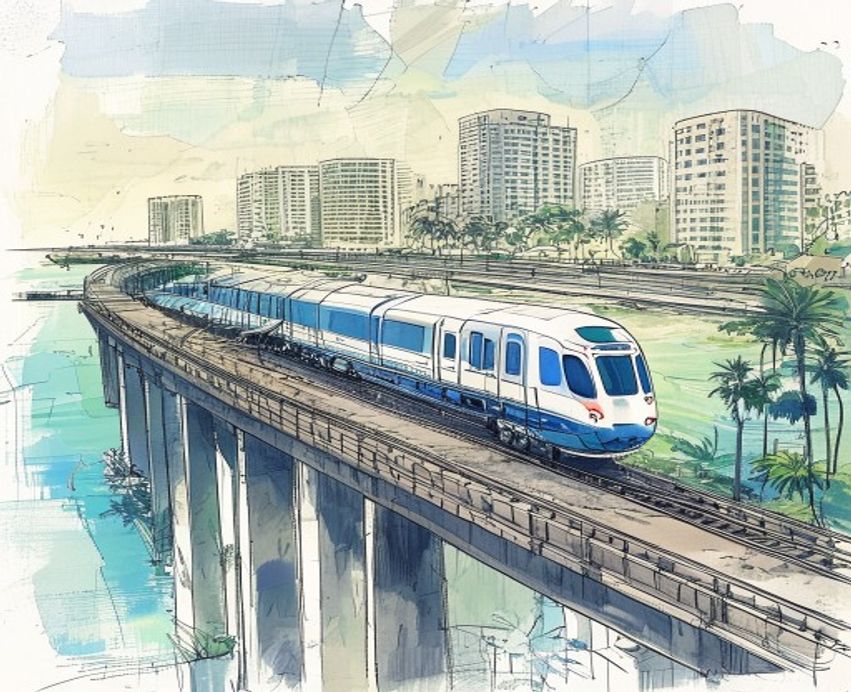
Brightline's financial troubles are entering a critical new phase, with a missed payment expected around July 15 poised to trigger a formal event of default — even as the warring factions of bondholders who would shape any rescue plan remain unable to agree on terms.
At least three distinct creditor groups have emerged in restructuring negotiations, each seeking to control the financing and direction of any bankruptcy or workout process. The first is a bloc of hedge funds holding the railroad's $1.2 billion corporate debt tranche. The second is a coalition of insured municipal bondholders that includes major asset managers First Eagle, Invesco, and Nuveen. The third is a separate commuter-bond creditor group. According to reporting by Briefs and Bloomberg Law, the three factions have reached an impasse, with each apparently angling to serve as the lead lender in any debtor-in-possession financing — a position that would grant significant leverage over the outcome of any restructuring.
Fortress Investment Group, the private equity firm that currently owns Brightline, is reported to be willing to cede control of the company to creditors as part of a restructuring deal. That posture may accelerate a resolution, but it has done little so far to break the deadlock among bondholders who have competing financial interests and different exposure to losses depending on which path forward is chosen.
The July 15 payment deadline adds urgency to talks that have already dragged on without resolution. A formal default declaration would open new legal avenues for creditors to act but could also complicate day-to-day operations for the only privately owned intercity passenger railroad in the United States. Brightline currently operates service between Miami and Orlando, with ambitions for further expansion that now appear deeply uncertain.
For South Florida commuters and transit planners, the instability raises uncomfortable questions about service continuity on a corridor that has been promoted as a cornerstone of the region's evolving transportation network. Whether trains keep running through a restructuring process will depend heavily on whichever creditor group ultimately gains control — and on how quickly that question gets answered.
Original reporting on this story was published by Briefs and Bloomberg Law.