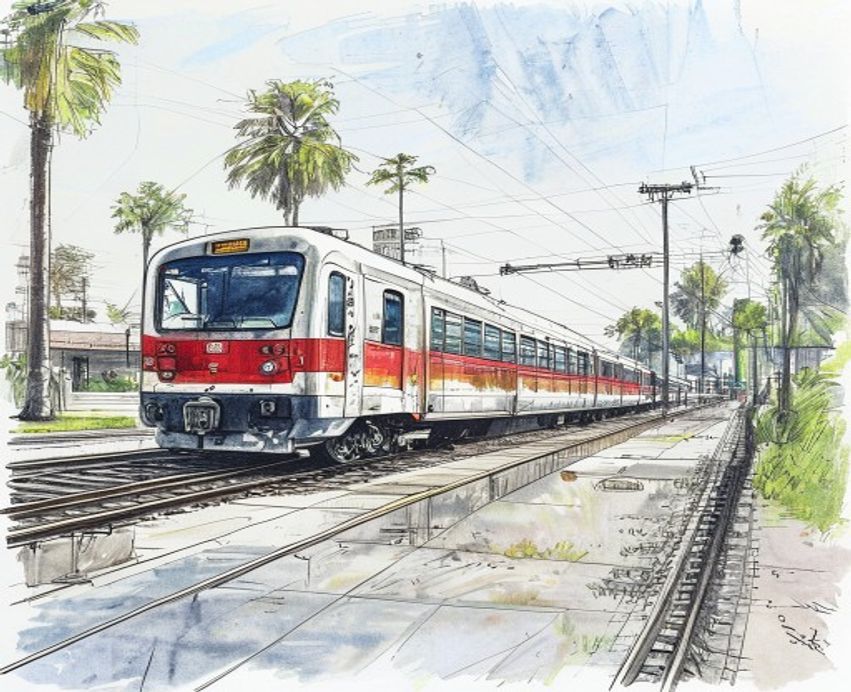
Florida's ongoing state budget standoff is casting a long shadow over South Florida transit, with the fate of commuter rail funding and a major Miami-Dade corridor project tied directly to whether House and Senate negotiators can close a $1.45 billion gap before the fiscal year begins.
At the center of the dispute is state support for the South Florida Regional Transportation Authority, which operates Tri-Rail. The Senate's FY2027 budget proposal, aligned with Governor Ron DeSantis's position, would lock in the steep funding reduction that took effect in the current fiscal year — dropping the annual SFRTA allocation from $42 million down to $15 million. The House, by contrast, has put forward a plan that would restore the agency's funding to its prior level.
The stakes extend beyond day-to-day Tri-Rail operations. The House budget also preserves a $200 million state matching commitment tied to the Coastal Link Northeast Rapid Transit Corridor, a proposed commuter rail line in Miami-Dade County that is part of a larger $927.5 million project. Without that state match, the project's financing structure could unravel, potentially stalling one of the region's most anticipated transit investments.
The two chambers were still negotiating as of late June 2026, with no resolution in sight. The overall difference between the House and Senate spending plans stands at roughly $1.45 billion, making transit one of many contested line items in what has become a protracted budget fight in Tallahassee.
For Miami-Dade riders and regional planners, the uncertainty is unsettling. Tri-Rail serves tens of thousands of commuters across Palm Beach, Broward, and Miami-Dade counties, and the authority has already been forced to navigate the financial turbulence triggered by last year's funding cut. A continued reduction at the lower level would further strain the agency's ability to maintain service levels and plan for future expansion.
The Coastal Link project, meanwhile, has been years in the making, envisioned as a way to bring faster, more frequent rail service to Miami-Dade's northeastern communities and better connect the region's transit network. Losing the state match would not only jeopardize federal funding partnerships but could also set back the project's timeline indefinitely.
Transit advocates and local officials have been watching the Tallahassee negotiations closely, though the outcome remains difficult to predict given the breadth of the budget disagreements between the two chambers. Whether the final compromise will resemble the House's more transit-friendly approach or hew closer to the Senate and governor's position is an open question that South Florida commuters are waiting to have answered.
Original reporting on the Florida FY2027 budget negotiations and their implications for SFRTA and the Coastal Link was published by Octus, formerly known as Reorg.