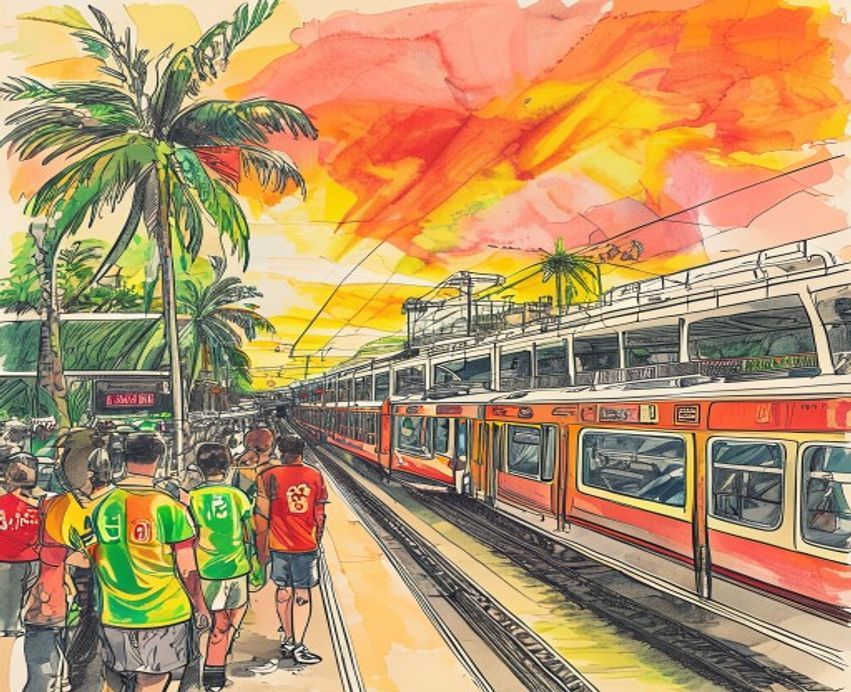
Tri-Rail logged its busiest Saturday in history on June 27, 2026, when more than 11,000 people rode the commuter rail system on the day Portugal faced Colombia in a FIFA World Cup group-stage match at Hard Rock Stadium in Miami Gardens.
The South Florida Regional Transportation Authority announced the milestone, noting that the figure far exceeded what the system typically sees on its strongest travel days. Tri-Rail has averaged just under 14,000 rides on weekdays throughout June — a benchmark that reflects the steady surge in demand the World Cup has brought to South Florida's transit network since the tournament began.
Saturday's record did not arrive in isolation. Two earlier match days that fell on Wednesdays also produced extraordinary numbers. On June 15, ridership topped the system's normal weekday average, and on June 24 the line carried nearly 17,000 riders — a figure that stands as one of the highest single-day totals the agency has recorded regardless of day of the week.
To handle the influx, Tri-Rail deployed additional express trains timed to match kickoffs and added dedicated post-game return service so fans would not face long waits after the final whistle. Riders traveling from Broward County and points north were directed to connect with free stadium shuttle buses running out of Golden Glades Station, providing a seamless link between the commuter rail line and Hard Rock Stadium without requiring fans to drive into the stadium's surrounding roadway network.
The operational adjustments appear to have paid off. By steering tens of thousands of World Cup attendees onto trains and shuttles, transit officials helped ease what could otherwise have been severe highway congestion along the Interstate 95 and Florida's Turnpike corridors that funnel traffic toward Miami Gardens on match days.
The World Cup — co-hosted by the United States, Canada, and Mexico — brought multiple group-stage and knockout-round fixtures to Hard Rock Stadium, making South Florida one of the tournament's most active host regions. Each match day has served as a stress test for a regional transit system that, under normal circumstances, caters primarily to weekday work commuters traveling between Miami-Dade, Broward, and Palm Beach counties.
The back-to-back ridership records suggest that a significant share of the international fan base arriving in South Florida is willing to use public transit when reliable, frequent, and well-organized service is on offer — a data point that transit advocates and regional planners are likely to cite in future discussions about expanding Tri-Rail's capacity and weekend service levels.
Ridership figures and operational details were originally reported by the South Florida Regional Transportation Authority via Tri-Rail's official press release channel.